
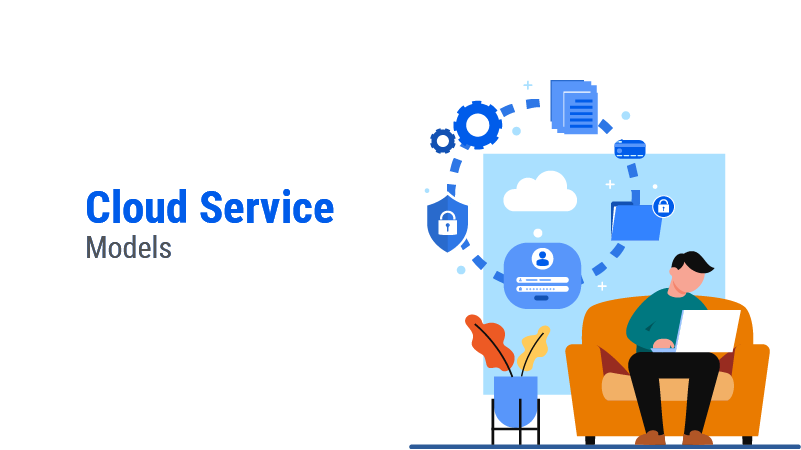
Cloud computing is really changing the way that companies do things with technology. This is a deal for businesses and cloud computing is making a lot of things easier, for them. Cloud computing is helping businesses to use technology in a new way. Of building and taking care of their own equipment companies can now use cloud service models that give them different levels of control and flexibility. The main cloud service models are:
- Infrastructure as a Service
- Platform as a Service
- Software as a Service
These are the three ones. Cloud services come in forms. Infrastructure as a Service is one type. Platform as a Service is another. Software, as a Service is also an one. They all help in ways.
It is really important to understand these models so you can choose the cloud strategy for your business. In this blog we will take a look at IaaS, PaaS and SaaS including what they offer, their benefits and how they are used in real life.
What Are Cloud Service Models?
Cloud service models are how cloud services are delivered to users. Each model is different in terms of how responsibility the cloud provider and the user have.
Some models give you control over the equipment
Others make it easier to develop software
Some provide applications that are ready to use
Infrastructure as a Service
Infrastructure as a Service is the basic cloud service model. It gives you access to computing resources like servers, storage and networking over the internet.
Key Features of IaaS
You can use computing resources when you need them
It is very scalable and flexible
You only pay for what you use
You have control over the operating systems and applications
With IaaS businesses do not need to buy their own equipment. Instead they can rent what they need. Manage it themselves.
Benefits of IaaS
IaaS gives you a lot of control and flexibility. It is great for businesses that want to manage their applications and operating systems without having to buy equipment.
It also helps businesses grow quickly making it perfect for companies that are getting bigger and applications that need to change
Use Cases
Hosting websites and web applications
Storing and backing up data
Creating development and testing environments
Platform as a Service
Platform as a Service gives developers an environment to build, test and deploy applications. It includes equipment, operating systems and development tools that are managed by the cloud provider.
Key Features of PaaS
It has built-in development frameworks and tools
It updates and maintains itself automatically
It makes deploying applications easier
It supports many programming languages
PaaS makes it easier for developers to focus on writing code by taking care of the equipment.
Benefits of PaaS
PaaS helps developers work faster and more efficiently. It reduces the time it takes to build and launch applications by giving them to-use tools and environments.
It also helps development teams work together better since everyone is working on the platform.
World Use Cases
Developing and deploying applications
Creating and integrating APIs
Software as a Service
Software as a Service is the most user-friendly cloud service model. It delivers software applications over the internet so you do not need to install or maintain anything.
Key Features of SaaS
You can access it through a web browser
You do not need to install anything
It. Patches itself automatically
You pay a subscription fee
You can use SaaS applications from any device with an internet connection.
Benefits of SaaS
SaaS is easy to use. Does not require a lot of technical knowledge. It reduces the workload of IT teams since the provider takes care of maintenance, updates and security.
Use Cases
Email services and communication tools
Customer relationship management systems
Differences Between IaaS, PaaS and SaaS
Level of Control
IaaS gives you the control, over the equipment
PaaS gives you control over applications but not equipment
SaaS gives you the least control focusing on ease of use
Management Responsibility
With IaaS you manage applications, data and operating systems
With PaaS you focus on developing applications
With SaaS the provider takes care of everything
Ease of Use
IaaS requires technical expertise
PaaS makes development easier
SaaS is the easiest to use and does not require setup
Conclusion
Businesses can pick the approach to get things done better and make their work more efficient by understanding these service models. They can also reduce costs. Make new things happen faster with these service models.
As cloud technology gets better and better these service models will still be important, for making solutions that can grow and compete with others.
Also Check Best Benefits of Cloud Computing for Businesses in 2026








Leave a Reply